Societal norms and women’s low labour presence…
When you land at Mumbai’s airport, you can book a prepaid taxi service. You’ll find a separate counter if you want a woman driver. It is meant for women passengers who prefer to have a female driver for that extra assurance of safety.
Presumably, if an equivalent option were available to men, it would have gone unnoticed.

What took so long for women-driven airport cabs to be introduced? For that matter, why are women-driven taxis not more common in other metro cities, and not just at airports?
What about bus conductors? Of course, women in the workforce are increasingly more visible, and not just as casual labour or farm workers. In some places, the presence of women is remarkable. For instance, female participation in projects under the National Rural Employment Guarantee Scheme (not exactly a badge of honour but still) is about 50%. India also boasts of the highest share of female airline pilots at 15% while the world average is barely 5%. Not too long ago, half of India’s banking assets were under institutions headed by women (and so was one of our stock exchanges). India had a female head of state decades before most other countries. And not to forget women finance and defence ministers, important glass ceilings that were breached.
By Dayanand Mangaonkar
Read MoreTata Motors resorted to unfair labour practice, rules Bombay HC; orders to compensate 52 employees
A bench of Justice Ravindra Ghuge has accordingly ordered the automobile giant to pay compensation to the 52 employees, who moved the HC challenging the orders of an Industrial Court in Pune, refusing any relief to them.

In a setback for Tata Motors, the Bombay High Court has held that the company resorted to unfair labour practices with thousands of its temporary workers by recruiting them first and then letting them work for some months and then terminating their services and after a brief gap, again recruiting them and terminating them within a few months.
The HC held that the only intention of the company was to ensure that these workers do not complete 240 days, which would have made them eligible for being appointed on a permanent basis.
A bench of Justice Ravindra Ghuge has accordingly ordered the automobile giant to pay compensation to the 52 employees, who moved the HC challenging the orders of an Industrial Court in Pune, refusing any relief to them.
The temporary employees represented by advocate Rahul Kamerkar highlighted the fact that the company had a special department that recruited temporary employees multiple times. It pointed out that not a single such employee was allowed to work for more than 240 days and in fact, their services were terminated just when they completed 238 days or around 225 days.
After the termination, the employees were again recruited after a gap of half a year and the pattern repeated for around 2,500 to 3,000 such temporary employees.
Justice Ghuge, in his orders passed on February 25, noted that some of the temporaries worked for almost 238 days in one round, several of them have worked in several rounds in between 225 to 235 days. “These temporaries were disengaged when they were very close to 240 days and some were even short by 2 to 8 days.
The modus operandi adopted by the company has thus been fully exposed,” the judge noted.
“The management neither has any explanation, which ought to be based on evidence and not by way of arguments nor was any evidence placed before the Labour Court to establish a convincing reason as to why these temporaries were not allowed to complete 240 days when most of them had reached in between 230 days to 238 days,” the bench said, adding, “This demolishes the case of the management that the temporaries’ engagement was strictly co-related to the rise and fall of manufacturing activities exactly after completing seven months in employment. It was a complete pretence.”
“I have come to a firm conclusion that in hundreds of cases, the company has created a farcical picture by posing that the work allotted to the temporaries was limited only to the maximum extent of 7 months. The dedicated department for the engagement of temporary workers apparently kept a close watch on the duration of employment of these employees. This indicates that the company has created an eye-wash and paperwork with the intention of creating evidence that no worker had completed 240 days,” Justice Ghuge opined.
Accordingly, Justice Ghuge drafted a compensation slab, which Tata Motors will have to adhere to. Following is the compensation ordered by the bench based on the tenure an individual worker worked for.
Term of 211 days and above – Rs.75,000/-
Term in between 180 to 210 days – Rs.65,000/-
Term in between 150 to 179 days – Rs.55,000/-
Term in between 120 to 149 days – Rs.45,000/-
Term in between 90 to 119 days – Rs.35,000/-
Term in between 60 to 89 days – Rs.25,000/-
Below 60 days – No compensation
After P&G now ABB India introduces a Gender-Neutral Parental Leave Program for staff

The inclusive approach, in the Indian manufacturing sector increasing now since after P&G, ABB extends similar benefits to LGBTQ couples and co-habiting partners, adoptive, and surrogacy commissioning parents.
ABB India has announced a gender-neutral and inclusive parental program recognizing the need for both parents to be present with their newborns or a new adoptive child under 3 years of age.
The inclusive approach, one of the firsts in the Indian manufacturing sector, extends similar benefits to LGBTQ couples and co-habiting partners, adoptive, and surrogacy commissioning parents.
The parental leave program forms part of ABB’s “Global Diversity & Inclusion Strategy 2030“, and is in line with the company’s global parental program introduced last year.
This program is envisioned to offer much-needed support to families so as to help them bond with their children and balance their personal and professional responsibilities.
As part of this program, each employee who is the secondary caregiver will be entitled to take 4 weeks of parental leave while the primary caregiver is eligible to take 26 weeks, as per the country’s maternity law.
Sanjeev Sharma, Country Head and Managing Director, ABB India said, “At ABB, we are committed to creating a diverse and equitable workplace where our employees feel valued and cared for.”
“This gender-neutral and inclusive approach, we truly hope, will provide our people the much-needed time to be fully invested in their families and be present for important milestones. We believe the focus on such gender-neutral programs will cascade across various sectors to build more inclusive workplaces, as the Indian industry strides into the next level of sustainable growth.” He added.
As part of ABB’s 2030 sustainability strategy, the organization is committed to driving social progress, along with the suppliers and in the communities. Within the workplace, ABB India has introduced various initiatives to foster the culture of Diversity and Inclusion which includes the gender-neutral focus.
For the last couple of years, a series of unconscious bias workshops have been conducted for all employees to raise awareness around the biases that one may have but is not conscious of.
Local diversity councils function as a support group for women and ABB has been consistently increasing women’s representation across businesses. Various initiatives are also in progress to enhance awareness, increase access and make the workplace more inclusive.
Read MoreEPFO plans new pension scheme
The EPFO had amended the scheme in 2014 to cap monthly pensionable basic wages to ₹15,000.
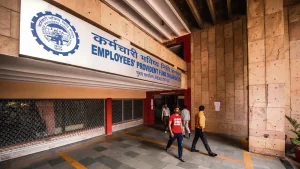
Retirement Fund body EPFO is mulling a new pension product for organised sector workers who are getting basic wages of more than ₹15,000 per month and are not mandatorily covered under its Employees’ Pension Scheme 1995 (EPS-95).
At present, all those employees in the organised sector whose basic wage (basic pay plus dearness allowance) is up to ₹15,000 per month at the time of joining service are mandatorily covered under EPS-95.
“There has been demand for higher pension on higher contributions among the members of the Employees’ Provident Fund Organisation (EPFO). Thus, it is under active consideration to bring out a new pension product or scheme for those whose monthly basic wages are more than Rs 15,000,” a source privy to the development told PTI.
As per the source, the proposal on this new pension product could come up for discussion in the meeting of EPFO’s apex decision making body Central Board of Trustees (CBT) on March 11 and 12 at Guwahati.
During the meet, a sub-committee constituted by the CBT on pension related issues in November 2021 would also submit its report.
The source explained that there are EPFO subscribers who are getting more than ₹15,000 monthly basic wages who are forced to contribute lower (at the rate of 8.33% of ₹15,000 per month into EPS-95) and thus they get lower pension.
The EPFO had amended the scheme in 2014 to cap monthly pensionable basic wages to ₹15,000.
The threshold of ₹15,000 applies only at the time of joining service. It was revised upward from ₹6,500 from September 1, 2014 in view of price rise and pay revisions in the formal sector.
Later, there were demands and deliberations to raise the threshold monthly basic wage to ₹25,000, but the proposal was not approved.
As per industry estimates, raising pensionable pay could have brought 50 lakh more formal sector workers under the ambit of EPS-95.
“A proposal for increase in the wage ceiling from Rs 15,000 per month to Rs 25,000 per month for coverage under the Employees’ Provident Funds & Miscellaneous Provisions Act, 1952 has been submitted by the Employees’ Provident Fund Organisation (EPFO). No decision in this regard has been taken,” former labour minister Bandaru Dattatreya had stated in a written reply in the Lok Sabha in December 2016.
The source said there is a need for a new pension product for those who are either forced to contribute lower or who could not subscribe to the scheme as their monthly basic wages were higher than ₹15,000 at the time of joining service.
The source added that there is no move to hike the pensionable salary cap by the EPFO in the immediate future and in that scenario, the body has to think about giving coverage to those formal sector workers who are excluded from the EPS-95 due to higher basic wages.
The matter of pensionable salary cap is also sub-judice in the Supreme Court. In 2014, Kerala High Court allowed the employees to contribute into the EPS-95 on the basis of the actual basic wages drawn by them.
In April 2019, the apex court had dismissed a special leave petition filed by the EPFO against the Kerala High Court judgment. In January 2021, the apex court recalled the dismissal order in the review petitions filed by EPFO.
In February, 2021, the apex court restrained the high courts of Kerala, Delhi and Rajasthan from initiating contempt proceedings against the Centre and EPFO over non-implementation of their verdicts .
Read MoreSection 80JJAA : Tax Deduction for Employment of New Employees;
Section 80JJAA : Tax Deduction for Employment of New Employees;
Problem of unemployment is not a small problem for any country. This particular section was introduced by Govt. in Income Tax Act to generate more employment and to encourage people. Lets have a look at this blog and you can plan the recruitment process to claim a huge amount of deduction of additional employment cost.

What is Section 80-JJAA ?
This is a new section in respect of deduction of additional employee cost of additional employees. It is applicable from the Assessment Year 2017-18. In this blog, we will go through the conditions, amount of deduction and practical examples etc.
First of all let’s understand some important terms related to this section.
What is meaning of additional employees as per section 80-JJAA?
It means an employee who has been employed during the previous year but does not include the following:
1. Employees whose total salary is more than Rs. 25,000/- per month.
2. Employees who were employed for less than 240 days in the previous year (150 days in case of manufacture of apparel or footwear or leather products)
3. Employees who do not participate in Recognised Provident Fund like casual workers etc.
4. Employees whose entire contribution is paid by the Government, under the Employees’ Pension scheme
Moving further, now we will understand what is the meaning of Additional Employees Cost.
What is the additional employees cost as per section 80-JJAA?
Additional Employee Cost means total emoluments paid or payable to additional employees.
However, in the case of existing business, additional employees cost shall be NIL if;
A. There is no increase in the Total no. of employees which means total no of employees joined during the previous year is equal to total no. of employees left during the previous year.
Example :
- Total No. of employees as on 01 April, 2019 : 100
- No. of employees joined during the year : 20
- No. of employees left during the year : 20
- Total No. of employees as on 31 March, 2020 : 100
- In the above example, there is no increase in Total No. of employees hence not eligible to claim deduction in this case.
- In the above example, if no. of employees joined were 30, then in that case deduction of employee cost for additional 10 employees will be available subject to the fulfilment of other conditions.
B. Emoluments are paid otherwise than by A/c payee cheque or account payee draft or any prescribed electronic mode ( like RTGS, NEFT etc).
What is the meaning of emoluments given in section 80-JJAA?
Emoluments means any sum paid or payable to an employee in lieu of his employment by whatever name called, but does not include—
(a) Any contribution paid or payable by the employer- To any pension fund or
– Provident fund or
– Any other fund for the benefit of the employee under any law for the time being in force;
(b) Any lump-sum payment paid or payable to an employee at the time of- Termination of his service or
– Superannuation or
– Voluntary retirement
Example : Gratuity, severance pay, voluntary retrenchment benefits, leave encashment ,commutation of pension etc
What are the conditions to claim deduction u/s 80-JJAA?
To claim the deduction under this section, following conditions needs to be satisfied :
1. The assessee must having Income from the Business Head and he is liable to get his accounts audited as per the requirement of section 44AB along with a report of a CA in Form 10DA.
2. It should be a new business. It should not be formed by splitting up or reconstruction of an existing business.
3. Business is not acquired by way of transfer from any other person or as a result of any business reorganisation.
4. Deduction should be claimed in the income tax return.
For more details, please be in touch with your CA
Read MoreA Demonstration Representative, working on Commission basis, is a Workman under section 2(s) of the Industrial Disputes Act, 1947
A Demonstration Representative, working on Commission basis, is a Workman under section 2(s) of the Industrial Disputes Act, 1947 if his work was incidental to the main job of the Industry.

Commission paid to the Cintractual Employee is also remuneration since the same is paid against utilisation of service of the employee.
Commission is only a form of pay and can not escape the satisfaction of definition under section 2(s) of the Industrial Disputes Act, 1947.
Employee-Employer relationship would exist when the employee works for hire or reward and identifying mark of a servant is that he should be under the control and supervision of the Employer in respect of his work.
Read More
BANK ACCOUNTS OF DEFAULTING EMPLOYERS CANNOT BE PERVERSELY FROZEN BY EPFO…
The EPFO ought to ensure that indiscriminate communications to clients of defaulting employers and freezing orders of bank accounts are not written so as to jeopardies the business interests of employers.

The EPFO may take less stringent steps such as debit-freeze etc. as a first step for achieving the purpose. Freezing of bank accounts ought to be resorted to in exceptional circumstances since complete freezing of Bank accounts would stop the cycle of revenue which would also be detrimental to the EPFO itself because it would thereafter not be possible for the defaulting employers to recover revenues from their clients as well as make payment of salary/wages to its employees.
There has been a perverse tendency among the Employees’ Provident Fund officials to unnecessarily flaunt the powers vested in them. They do not hesitate to take drastic decisions in freezing the bank accounts of the defaulting employers.
This mentality has done more harm than good to the cause that they espouse for the benefit of the working class. In fact, the bank accounts should be frozen only in exceptional circumstances because that is bound to result in stopping the cycle of the revenue, which will be detrimental not only to the organisation but also to the EPFO. This step should be taken after due deliberation and consideration and not in a knee-jerk manner.
In almost every order under section 7A of Employees’ Provident Funds & MP Act determination of money contains a clause that the amount should be deposited by the employer within 15 days of the date of order whereas section 7-I of the Act provides filing of appeal before the EPF Appellate Tribunal within 60 days and another 60 days can be extended when there is a sufficient cause for not filing the appeal in first 60 days. The judicial discipline cause for such officers vested with the powers of the Civil Court while holding proceedings under section 7A of the Act they should act like Judges.
Nevertheless, the Recovery Officers vested with the power under sections 8-F and 8-F act in the most arbitrary and most cruel manner for recovery of use prior to the time period of appeal. They not only threaten to make recovery but also freeze the bank accounts of the employers which cause undue hardship. The Recovery Officers do take such steps to impress upon the higher authorities.
In Vishakha Facility Management vs. The Regional Provident Fund, 2022 LLR 218 the Delhi High Court had made it clear that the freezing of bank accounts of defaulting employers ought to be done after due deliberation and consideration and not in a knee jerk manner.
The EPFO ought to ensure that indiscriminate communications to clients of defaulting employers and freezing orders of bank accounts are not written so as to jeopardise the business interests of employers. The EPFO may take less stringent steps such as debit-freeze etc. as a first step for achieving the purpose. Freezing of bank accounts ought to be resorted to in exceptional circumstances since complete freezing of Bank accounts would stop the cycle of revenue which would also be detrimental to the EPFO itself because it would thereafter not be possible for the defaulting employers to recover revenues from their clients.
In the above-mentioned case, the Petitioner company sought directions for withdrawal of letters of attachment issued by the Respondent-Regional Provident Fund Commissioner to the clients and banks of the Petitioners because they were unable to pay the amount of Rs. 50,00,000/- to the RPFC as deposit, as directed by the Court vide order dated 4th August 2021.
When enquired by the Court as to under what powers did RPFC take the action of issuing attachment letters and bank freezing letters, the RPFC submitted that the action was taken under section 8F of the Act, and certain other provisions. When further enquired as to why the orders of the Central Government Industrial Tribunal (hereinafter ‘CGIT’) dismissing the appeal due to the failure to deposit, etc. was not awaited for, the answer was that since the CGIT’s order dated 3rd March 2020 was subject to deposit of the pre-deposit amount of Rs.3,40,44,872/- and since the stay was vacated, the RPFC took the said action as per the Act.
However, On the last date i.e., 3rd September 2021, the High Court had clearly directed that all notices freezing the bank accounts would stand suspended and the letters issued to the clients of the Petitioner shall also stand suspended but none of the bank accounts has been de-frozen, except one bank account in Indian Bank.
The High Court ruled that in future the EPFO office ought to ensure that such indiscriminate communications to clients and freezing orders of bank accounts are not written so as to jeopardise the business interests of employers.
Accordingly, the Petitioner was directed to make the payment of Rs.50,00,000/- within two weeks. If the said payment was not made, the CGIT was permitted to proceed in accordance with the law. If the Petitioner was to face any difficulties owing to the RPFC’s letters issued to the clients or to the banks, it was permitted to move an application before the Court giving the specific names of the officer and of the organisation which is still giving effect to the earlier orders passed by the RPFC. Upon such an application being moved, this Court would then consider the same in accordance with the law.
Read MoreMaternity leave up to 180 days cannot be claimed by every woman employee: HC
High Court of J&K and Ladakh has held that maternity leave up to 180 days cannot be claimed by every woman employee.

Deciding a petition filed by a lady doctor working in SKIMS Soura here, a bench of Justice Muhammad Akram Chowdhary pointed out that the employer has to keep in mind the nature of duties of such employees as well. The doctor had challenged an order of the tertiary care hospital authority by virtue of which she was granted 45 days maternity leave from December 11 last year to January 24, 2022. In her plea, the medico had sought the court intervention for grant of her maternity leave up to 180 days instead of 45 days.
The petitioner contended that she was entitled to the maternity leave as a ìmatter of rightî and was seeking direction in keeping with the SRO-353 dated 6 October 2015.
Read MoreLabour code may cap allowances at 75% of wages in first year, 50% over next three years.

The government is mulling a high limit on allowances at 75-80% of the wages of an employee in the first year of the roll-out of the labour code on wages. This could gradually be brought down to 50% over three years, as specified in the code, people familiar with the deliberations told ET.
The other major change under consideration is restoration of the threshold on the number of employees in an organisation to 100 from the proposed 300 under the industrial relations code for seeking the government’s permission before retrenchment or closing down operations.
The industry has resisted a cap on allowances at 50% of wages, reasoning it would raise their employee costs.
Under the code, wages include all remuneration by way of salaries, allowances or otherwise and include basic pay, dearness allowance and retaining allowance, if any, but exclude allowances such as house rent allowance and overtime allowance.
The code provides that if all these allowances not included in wages together exceed one-half or the per cent so notified, the excess amount shall be deemed as remuneration and added to wages under this clause.
Such an increase in wages would require higher payment to provident fund by both employer and employees and also raise gratuity payments. This would reduce take-home pay for workers, though they would gain a higher contribution to retirement savings.
“The government is discussing changes that can be made to the code in view of the concerns expressed,” an official privy to the deliberations said on condition of anonymity.
The Code on Wages was passed by Parliament in 2019 while the Industrial Relations Code was approved in September 2020.
Though the rules governing the four codes passed by Parliament were ready by March 2021, they have not yet been implemented because of stiff resistance from employers and employees on certain issues.
The industry fears the proposed changes in the code, at a time when the economy is still recovering from the impact of the pandemic, would put unnecessary pressure and increase their employee cost.
“This has prompted the Centre to relook at the necessary changes that can be made to ensure minimum additional liability on employers, especially now when the pandemic has hit the businesses hard,” said another person aware of the deliberations.
The Industrial Relations Code had raised the threshold for requirement under a standing order, which are rules of conduct for workmen employed in industrial establishments, to more than 300 workers from the earlier 100 workers.
This would have given more businesses freedom to manage their workforce without requiring government permission.
Experts said tweaking some of the provisions might help the government win over the employers and trade unions’ confidence, thus enabling faster implementation of the codes which are critical to the ease of doing business.
“Phased introduction of capping allowances at 50% will help the government buy-in employers’ consent for more important minimum wage provisions to kick in,” said labour expert KR Shyam Sundar.
“Further, redefining the threshold from 300 to 100 will have limited implications for flexibility for employers but will largely appease the trade unions,” Sundar said, adding it will enable the government to roll out all the codes faster
Read MoreHaryana State Employment of Local Candidates Act, 2020

The Writ Petitions challenging the constitutionality of the Haryana State Employment of Local Candidates Act, 2020 was heard by the Punjab and Haryana High Court today. After hearing Adv. Mr. Tushar Mehta, Solicitor General of India on behalf of the State of Haryana, the High Court admitted the Writ Petition and granted a stay on the operation of the Act.
This Act is regarding compulsory recruitment of the locals in the State of Haryana upto the salary of Rs. 30,000/- pm.
Read More